




Your event planner resume is your first impression—and in a competitive market, it needs to do more than list responsibilities.
This guide shows you exactly how to write a resume that grabs attention, follows expert resume guidance, leverages fresh templates, and pairs seamlessly with writing an effective cover letter to secure your next big role.
In this guide, you’ll discover:
- ↪ 11 standout event planner resume examples that inspire
- ↪ How to write a resume that would land you a great job
- ↪ Proven ways to present your corporate event planning skills for maximum impact

Be short yet impactful
- Instead of overloading your event coordinator resume with everything you’ve done in the past like managing vendor relationships or overseeing supplies, craft work experience bullet points that focus on your best event planning skills.
See more event coordinator resumes >

Skills prove your worth
- As an event planner, you’re going to be in-charge of a lot of things and subsequently will require a wide skill set to ensure everything goes as planned on the big day.
- It’s also a good idea to browse the job description and understand their expectations. For instance, if they need someone for weddings specifically, focus on skills like visualization/creative, hospitality, wedding trends, etc.

Nailing the job description
- Does the company require candidates with a hospitality degree? Do they need someone who can handle specific guest requests or manage large event budgets? Do they prefer certificates?
- Align your event manager resume to include as many of these requirements as possible and portray yourself as the ideal candidate who is best suited for the job.
Add a career objective
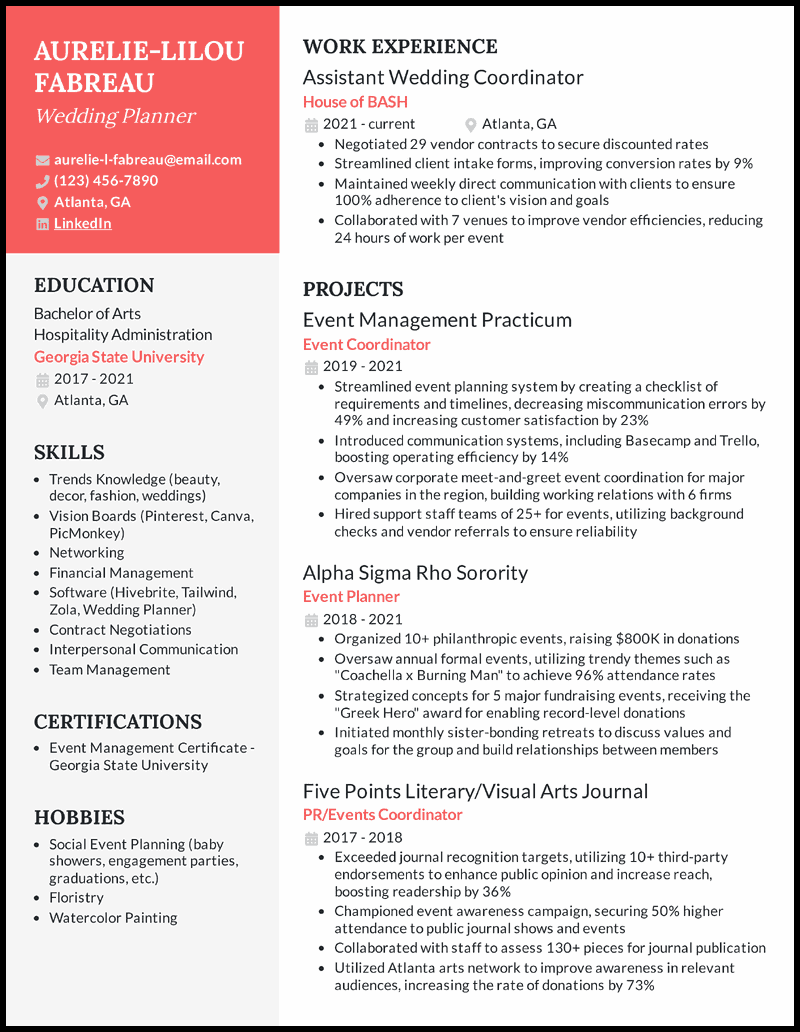
- A resume objective can help your wedding planner resume secure the job if done properly.
- Here’s the trick to creating one that can win over employers: Use proactive words like passionate, motivated, and detail-oriented to begin your sentences. Next, list your best skills and explain how you aim to use them to create business impacts
Telling your career progress
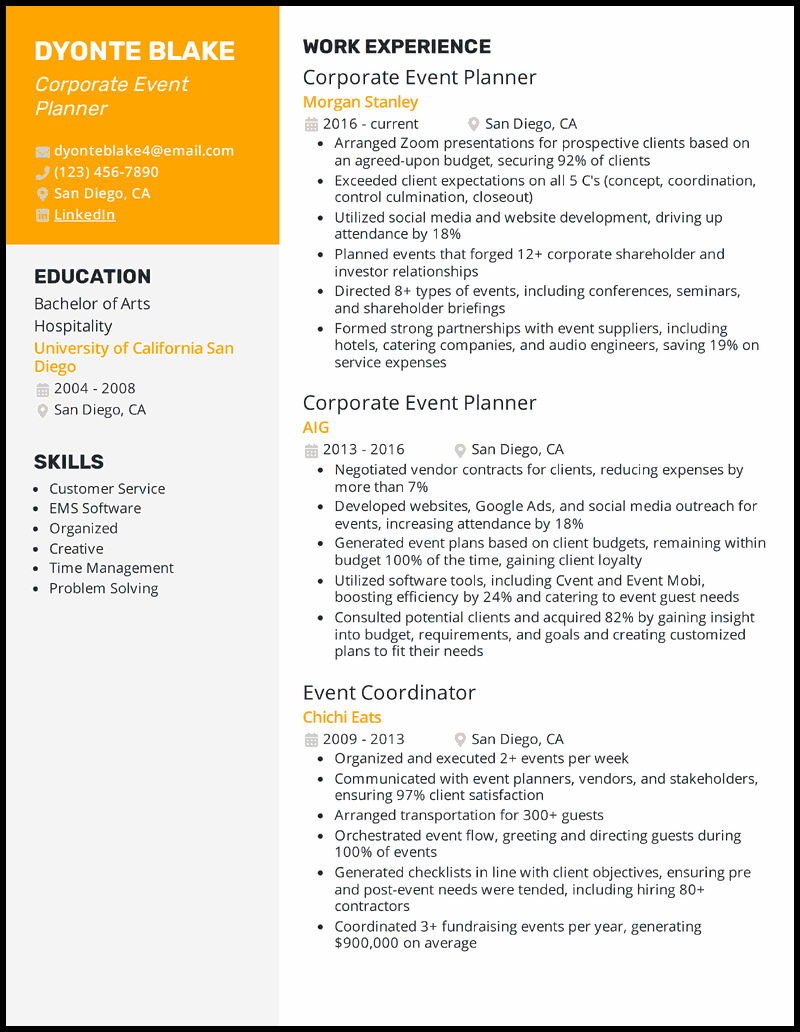
- You don’t have to start out as an event planner to climb the higher ranks such as an event manager or director.
- If you’ve had a unique career start that can show your ability to organize events, then use a reverse-chronological resume format to list your previous roles.
See more corporate event planner resumes >

Show technical abilities
- For a standout event director resume, mention your proficiency in using technology to organize events.
- We’re not referring to the basic ones like Slack or Canva. Be extra specific and add software like Wrike, Eventbrite, vFairs, and Whova.
Quantify your contributions
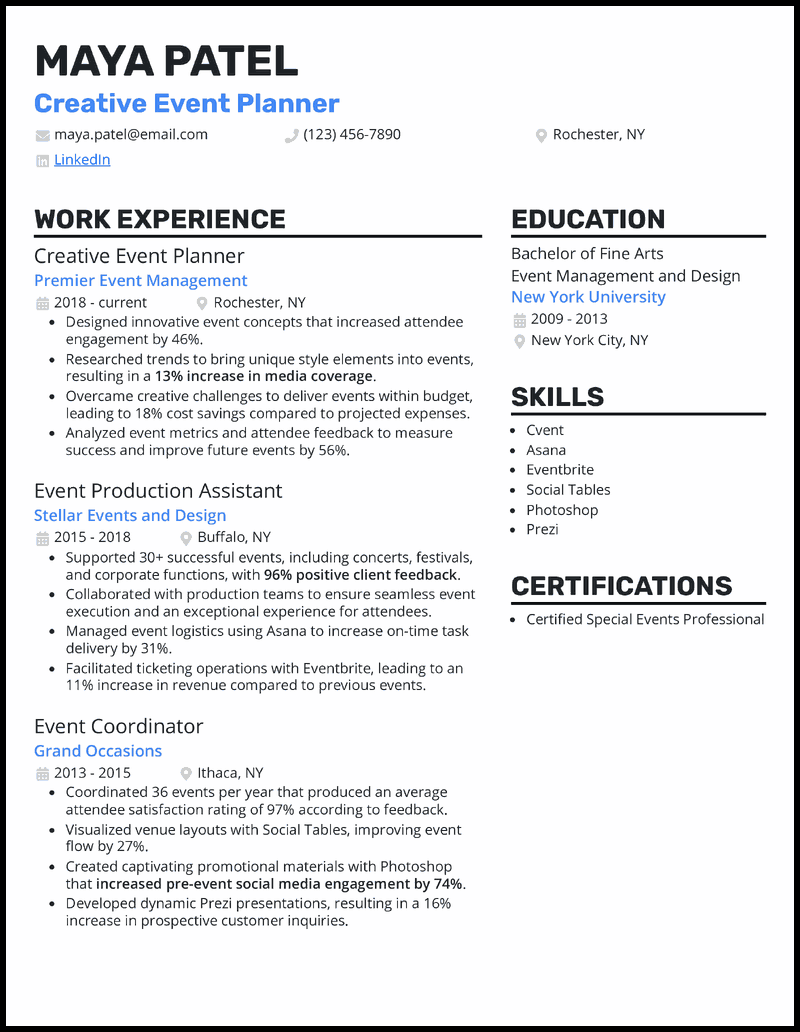
- Let your creative event planner be about previous jobs and the events that went great because of you. What was your contribution? How many team members did you handle? Were there any accidents that you prevented with safety measures?
Sell your education
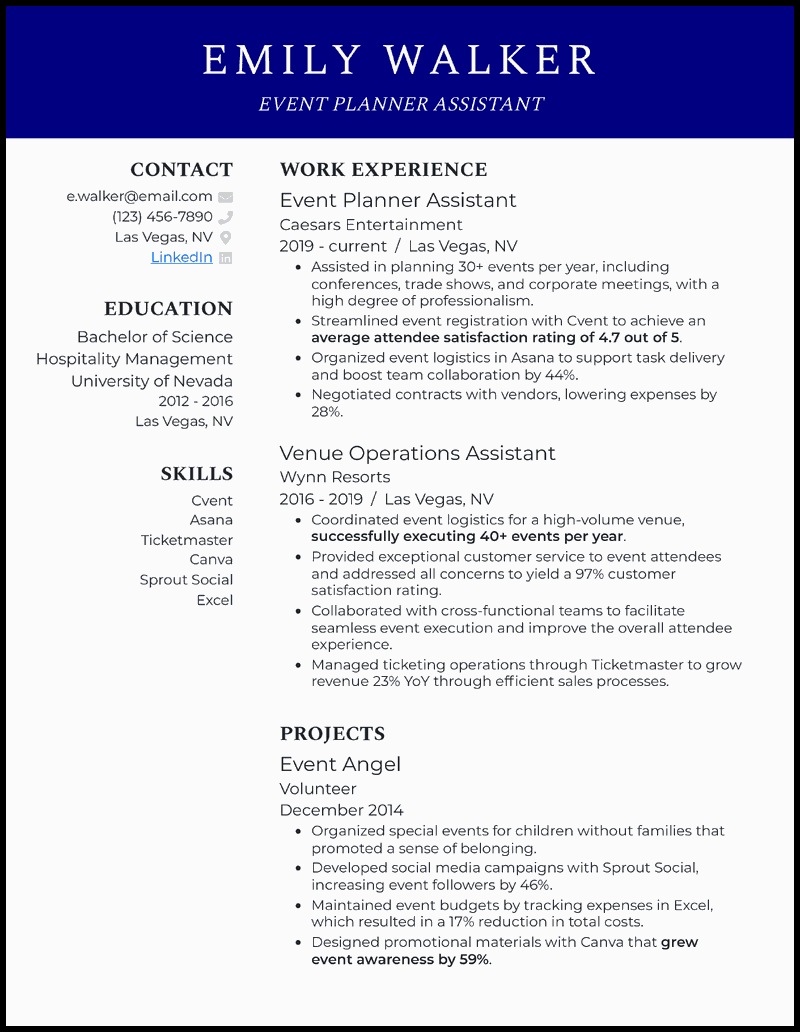
- If you’ve got a degree in something like Hospitality Management or Communication then don’t shy away from including it in your event planner assistant resume.
- Also, check your resume and see if there’s room to mention relevant courses like Principles of Management, Strategic Human Resource Management, and Revenue Management.
Spotlighting projects
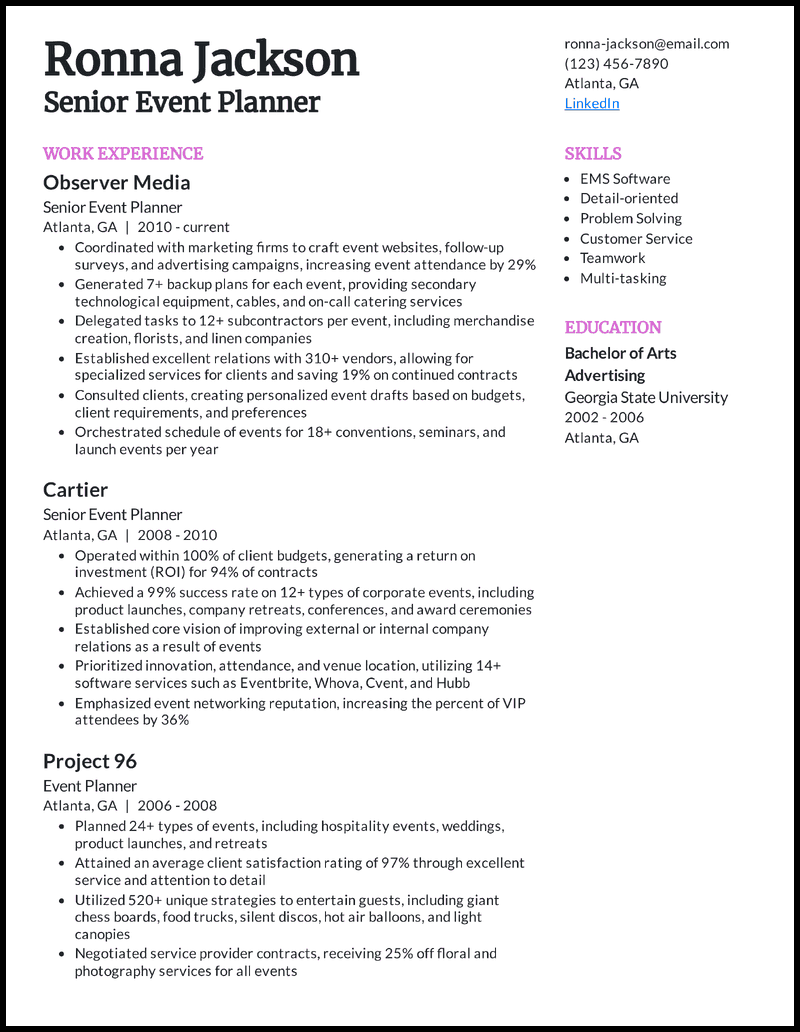
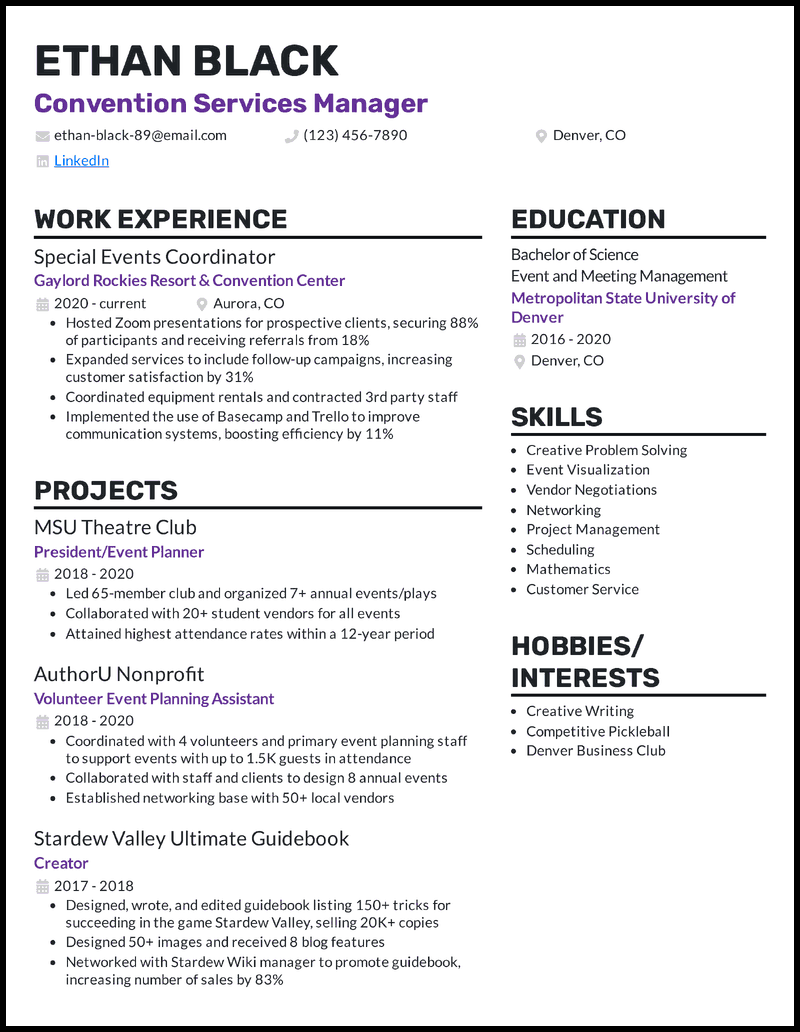
- Your senior event planner resume has reached a point where you can list a bunch of work experiences and let your projects take the center stage. Amplify them with numbers and core skills that put you ahead of any other competitor.
Be cautious with references
- Got past employers who can vouch for your event planning abilities and professionalism? Include them in your convention services manager resume only if the job description requires it; otherwise, it’s an outdated practice.
- Remember to inform all references that you’re going to add their info in your resume and give them a brief idea of the next event planning job you’re applying to.
Make the ATS smile
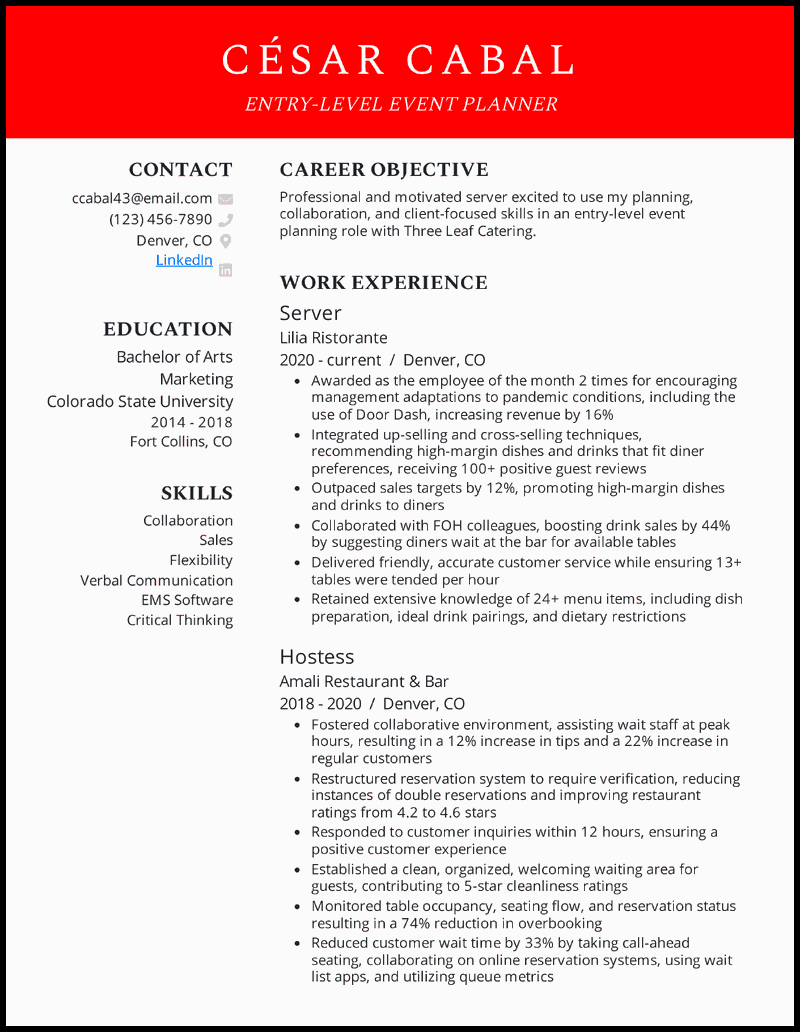
- Companies today use an ATS system to filter out generic candidates from the talented ones. The only thing that can distinguish you from the average event planner is tailoring your entry-level event planner resume to the ATS.
Related resume guides
How to Write an Event Planner Resume

Whether you’re seeking to coordinate corporate conferences, dreamy weddings, or nonprofit fund drives, build a resume that instantly reflects your ability to root out any chaos with grace and style.
Summary
Stand out with an event planner resume that showcases your flair for detail, creativity, and flawless execution backed by measurable success.
Package a successful story with numbers that speak about your abilities and the value you bring. As long as you can set yourself apart from the other best candidates, you can be sure of being on the interview list.
Your strongest suit is creating unforgettable experiences. We wish it were equally easy to plan your resume.
Whether you’re seeking to coordinate corporate conferences, dreamy weddings, or nonprofit fund drives, build a resume that instantly reflects your ability to root out any chaos with grace and style.
In the fast-paced event industry, hiring managers look for planners who don’t just dream up ideas but deliver results. That’s why your resume should go beyond pretty formatting.
We’ll tell you more about how to:
- Highlight your most successful events with measurable results
- Showcase leadership, organization, and client communication skills
- Tailor your resume to the specific role and employer
- Keep formatting clean and easy to scan
Let’s now get you the job.

Key event planner resume elements
A high-performing event planner resume balances creativity with structure. At its core, you should include:
- A professional contact section
- A punchy profile summary
- Key event planning skills (both soft and technical)
- Measurable accomplishments
- Work experience tailored to the events industry
- Relevant certifications and training
- Additional wins like awards or languages
Pro tip: Every section should prove you’re a logistical wizard, a detail fanatic, and a calm-in-the-storm problem solver.

Pack your header with spot-on details
When recruiters want to reach out, make it easy for them by providing the following:
- First and last names
- Official email address
- Current phone number
- City and State
- LinkedIn URL
- Online Portfolio (If available)

Kick off with a compelling profile summary
Here, assemble the best statement of you, your work history, skills, and achievements.
Example
Seasoned event planner with success leading 45+ events ranging from 50 to 5,000 attendees, reducing average planning costs by 22% without compromising quality. Committed to professionalism in ensuring seamless, experience-rich events and organizers’ peace of mind.

Impress with must-have event planning skills
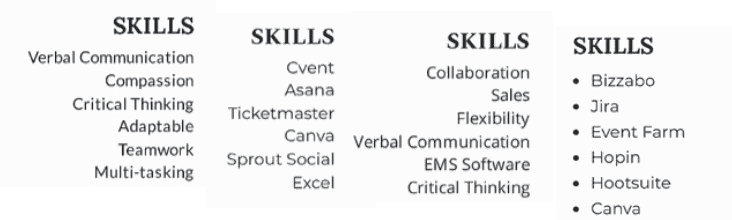
When companies and clients hire event planners, they seek someone who offers peace of mind. Can you do that? Then show it with a blend of must-have skills, including technical and soft competencies.
Remember, many employers now use online job screeners to scan and pass resumes based on the keywords from the job posting. Some of those key phrases are the skills they’re looking for.
To stand out, don’t just list your chops and hope for magic. Instead, use them in your work experience to drive impact.
Example of the best event planning skills for your resume:

Use hard numbers to quantify impact
Metrics are your secret weapon because they show effectiveness and set you apart from generic applicants.
Using the STAR (Situation, Task, Action, and Result) approach, please find the most impactful accomplishments from your career history and trim them down to commanding bullet points that include action verbs, skills, and measurable results.
It’s a compelling way of saying you’re qualified and have done it before to achieve business value. That would make a recruiter want you to come for an interview.
Example
✅Orchestrated a 500-guest gala with Trello and Asana, cutting planning time by 21 hours and saving $17K
✅Revamped fundraising strategy via Mailchimp, boosting attendance 34% and exceeding donations by $24K

What if you don’t have any event planning experience?
Every successful career story began with no experience. It’s no different for you. But, don’t expect sympathy to hand over the job.
Internship? Community service? School or club projects? Whatever you learned from these activities amounts to work experience. Find the transferrable skills and cleverly use them to underscore your potential.
Leverage:
- Volunteer event roles (school functions, fundraisers, community fairs)
- Part-time gigs involving scheduling, coordination, or customer service
- Roles in hospitality, marketing, admin, or PR
- School projects involving event logistics or group leadership

Add your relevant training
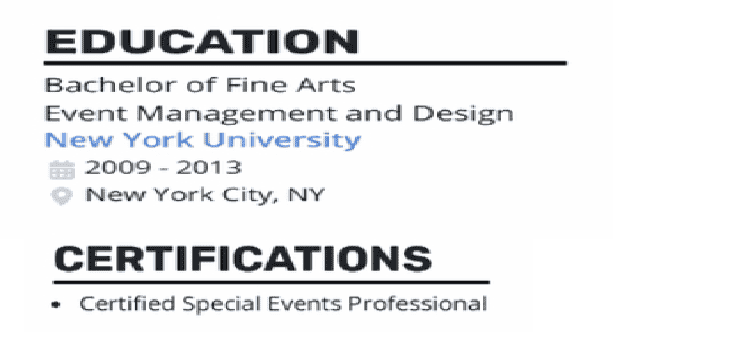
A degree isn’t necessary for an event planning job, but it won’t hurt your chances if you have one. Also, any formal training in hospitality, PR, communication, marketing, and such areas of study would make a difference. The key is to match the industry’s professional expectations.

Additional sections: Awards & languages
Do you have any recognition from school, awards for the top-class performer, won any competitions, or won the “Employee of the Month Award”?
Do you speak fluent Spanish or conversational French? All these prove you’re an excellent performer and can get you closer to the job.
Anything that proves your unique abilities deserves a highlight on your resume.
Key takeaways
As you prepare to write your resume, keep these in mind:
- Tailor every section to highlight your event expertise and value
- Use metrics and action verbs to show what you can do, not just tell
- Match your resume to the job with strategic keywords and ATS-friendly formatting
- Don’t shy away from adding volunteer work, certifications, or awards—they all count
Average Annual Salaries for Event Planners in the US
Now that your resume is ready and you’re landing interviews, it’s the perfect time to know your worth once you enter the workforce or get event planning gigs. Based on figures from the US Bureau of Statistics report of 1/5/24, here’s an overview of what you should expect to take home as an event planner:
| National/State | Annual Average Salary ($) |
|---|---|
| National | $65,090 |
| Virginia | $65,560 |
| Washington | $70,990 |
| Hawaii | $71,000 |
| Connecticut | $71,840 |
| New Jersey | $72,260 |
| California | $73,840 |
| District of Columbia | $75,330 |
| Massachusetts | $77,180 |
| New York | $87,000 |
| Maine | $101,230 |
Event Planner Resume FAQs

A standout event planner resume should use a clean, professional template with headers and all the key sections, viz. header, skills, work experience, education, and certifications. It should also use simple fonts and consistent font types, sizes, and margins. Most importantly, the experience section should use bullet points blending active verbs, skills, and metrics.
A great event planner resume objective must capture your potential and present it to employers in a powerful, specific overview.
Example:
Detail-driven event planning graduate with hands-on experience organizing campus-wide events for 500+ attendees. Skilled in vendor negotiations, budgeting, and creative theme development. Eager to bring energy and organizational excellence to Royal Caribbean’s dynamic events team.
Structure your work experience around transferrable skills gained from projects, internships, volunteer work, and coursework. The aim is to show your potential for getting the job done despite lacking direct work experience. Also, ensure that your resume has all the necessary sections.
A tailored one-page event planner resume is adequate to convince recruiters of your qualifications for the job. Cut fluff by focusing on top achievements that fit the role’s demands. Only cross to the second page if you have 10+ years of experience and an impressive track record.

Stephen is the co-founder and CEO of BeamJobs. Frustrated with the challenges he'd faced in his own job search, he left the corporate world to start BeamJobs with his brother. Drawing on firsthand experience with hiring and getting hired as technical talent, he started BeamJobs in 2020 to help qualified job seekers land interviews with less stress. Since then, more than 4 million people have built their resumes and cover letters on BeamJobs. Stephen's insights have been featured in notable outlets, such as Fast Company, Business Insider, Yahoo Finance, MIT, and Zapier. Learn more about Stephen.