



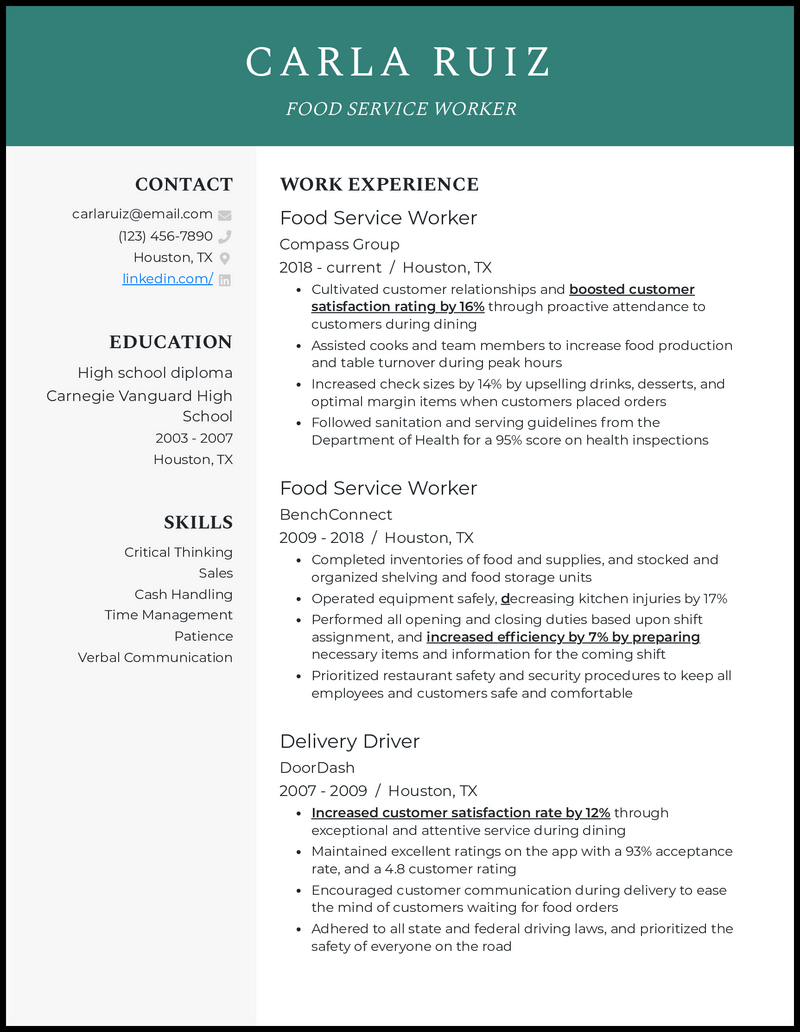
The food service industry pulls in a massive $996 billion every year. Therefore, so many people aim for the best positions; thus, standing out is no easy task.
In this guide, you’ll learn how to write a resume that catches an employer’s attention and how creating a cover letter can give you the extra push to land the role you want.
Inside, you’ll find:
- ↪ 7 food service worker resume samples and practical tips
- ↪ How to write a resume that meets the demands of the 2026 job market
- ↪ Ways to show you can adapt quickly and keep your cool under pressure
Why this resume works
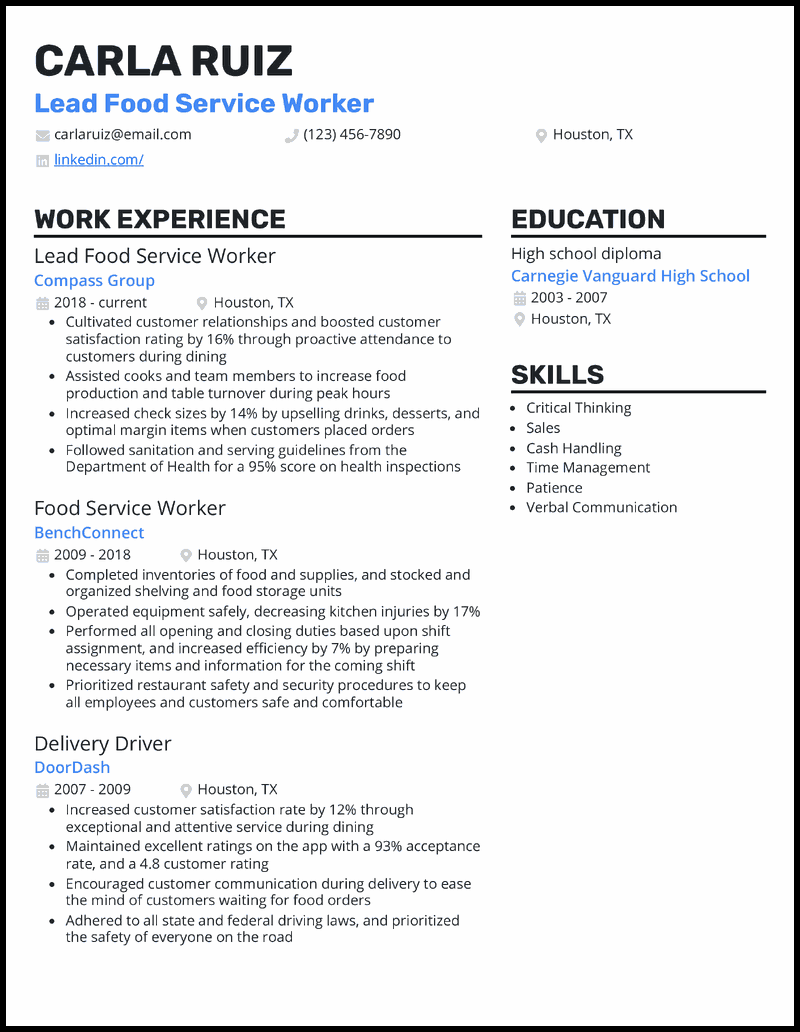
- Your food service worker resume should focus on metrics. If you pack your work experience with numbers, it shows credibility.
- Also, cater your resume skills to the job you’re seeking with a list that isn’t so long that the reader zones out.
Why this resume works
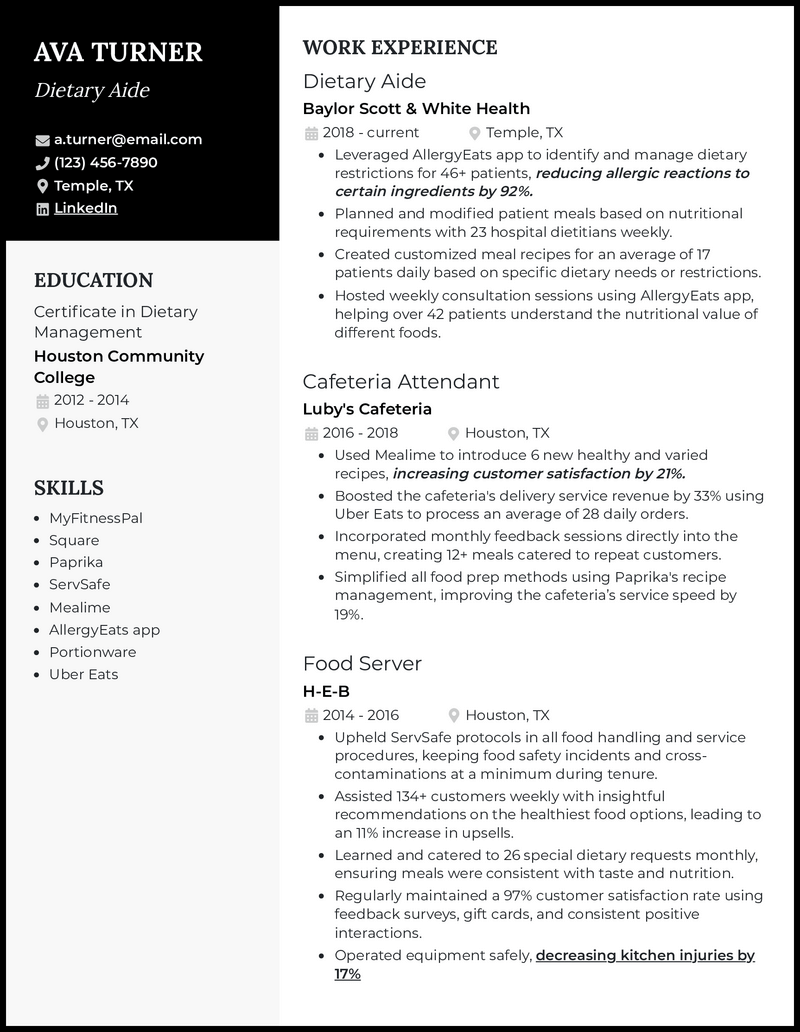
- Add any relevant experience to your dietary aide resume that highlights your ability to create and serve customized food meals while keeping safety protocols in check. You can also mention any past dietary consulting sessions you’ve held.

Why this resume works
- Your food service manager resume should use the best tricks to stand out.
- One top thing to know is that you require special skills. To nail that, double-check your resume for a fluid style that weaves skills into your experience.
See more food service manager resumes>

Why this resume works
- Having managerial skills in your food service director resume is a must.
- Therefore, list down any software you’ve used to manage your staff members and their schedules. Overall, create a blend of managerial, respectful, and hard-working experiences.

Why this resume works
- Your work experience is of utmost importance when building your online resume.
- Your food service specialist resume should focus on making this section pop. Devise strong, action-oriented work experience bullet points until there is no blank space left at the bottom of your resume.
Why this resume works
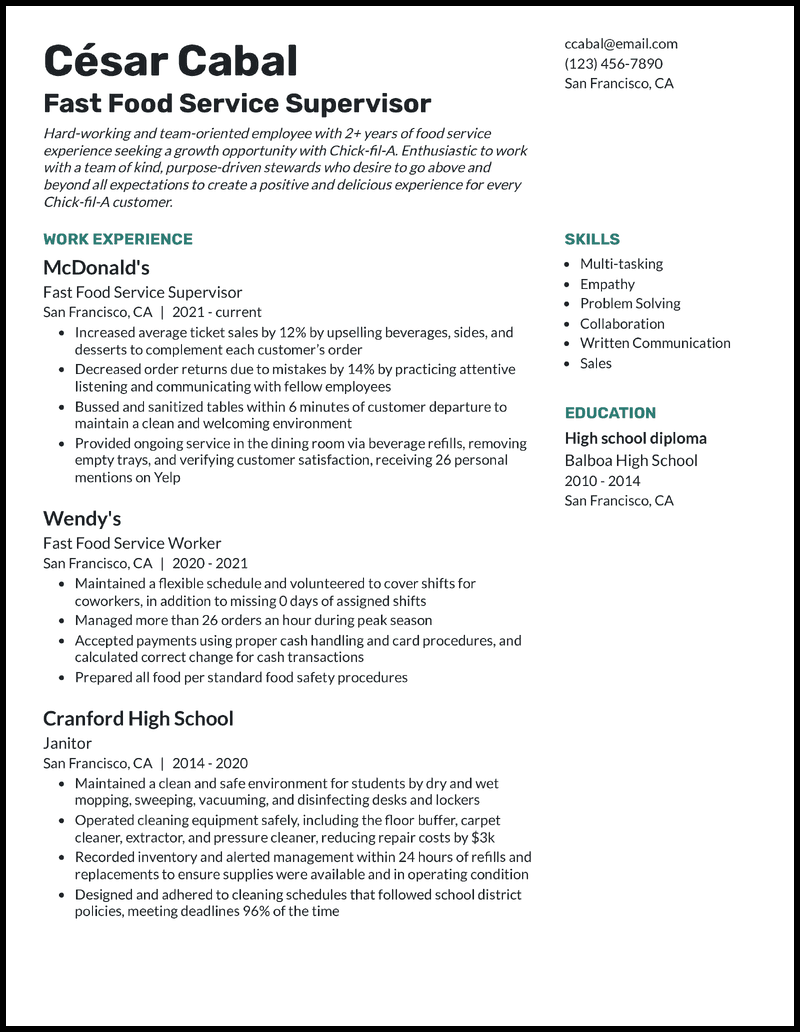
- A resume objective can be a great addition to your fast food service worker resume, but it’s not a requirement. Not all resumes have them, but here are some reasons you may want one: Take up space, Personalize, and describe.

Why this resume works
- Use direct language in the work experience section of your entry-level food service resume. Start each work experience bullet point with a strong action word to get right to the point and instill confidence in the reader.
- Also, remember to keep your resume formatting consistent.
How to Write a Food Service Worker Resume

You already know what you need: a food service work resume that puts you at the center of all action.
Summary
Ignite employer interest by building a resume that balances food prep skills, customer interaction, and compliance with health codes — all tailored to your target role.
When the hiring managers review your resume, serve them with high-impact achievements such as leading teams, complying with health guidelines, beating sales quotas, taking charge of dinner rush, and ensuring customers leave with a smile of satisfaction.
Since you’re not alone applying for the job, let’s show you how to stand out. With tailored bullet points that show value, a snapshot that puts your strengths in the forefront, and a format that impresses applicant tracking systems (ATS), write a resume that lands you the job just like these samples that won jobs in 2026.
We’ll show you how to:
- Highlight customer service and teamwork skills
- Show measurable achievements, like sales boosts or reduced wait times
- List relevant certifications, such as food safety or alcohol service
- Emphasize ability to work under pressure
- Keep layout simple and easy to read

Pick a resume template to reflect the business and your personality
Select a fun, creative resume template if you want to work in a local jazzy cafe. Try an elegant resume template if you’ll be working for fine dining and catered events. Providing food service for more serious populations, such as juvenile centers, hospitals, or schools? A professional resume template with clean, classic lines and muted colors will serve you best.

Give contact info
Show your confidence about getting the job by opening your resume with accurate, up-to-date, relevant contact information. Share your name, job title, email address, current and active phone number, city and state, and LinkedIn profile if relevant.
You’re telling recruiters you’re sure of your qualifications, and if they find you perfect, they can contact you.
Ensure the header is straightforward, easy to spot, and prominently placed at the top of your resume.
Example of a contact section


Make an impression with a compelling professional summary
Make a great first impression with a powerful overview of your skills, experience, and qualifications. Keep it compact so recruiters can read it at a glance and get a taste of your value.
The most effective formula here is to make this short statement as relevant to the job. Cut out fluff and say only what presents you in the best light.
Example of a resume summary statement
Food service manager with 7 years leading fast-paced teams, slashing waste by 23%, and driving a 34% boost in customer retention. Passionate about excellence, efficiency, high-functional teams, and business growth.

Underscore food industry skills
Note the job listing requirements, such as a healthcare setting needing you to “create reports to verify meal transactions” or a bistro asking you to take on “eliminating food waste.”
While you’d want your skills list to include “reporting” or “minimizing food waste,” look for opportunities in your work experience bullet points to show these skills in action.
Did accurate reporting reduce company losses? Did you initiate a rotation system that ensured produce remained fresh?
What we’re trying to say is that your success will be measured not by what’s on the plate but by the skills behind working in a team, excellent communication, multitasking, and working with grace even when under pressure.
A blend of technical expertise, people skills, and a knack for customer service shows that you can turn every meal into an unforgettable memory for every customer.

Quantify achievements from your work experience
Numbers pack a punch, and in the food sector, they show what you can do without you having to tell it. Whether managing a Tuesday lunch hour rush with grace, cutting wait time by 2 minutes, keenly listening to customers, or taking their orders correctly, you must underscore your impact in every role.
From your food service work experience, identify a maximum of three roles that closely match the job you’re applying for. Pack the most impactful outcomes with active verbs, skills, and metrics that say you’re in charge.

Write in active voice on your food service worker resume
Start each work experience bullet point with an active verb to propel the sentence forward. Words such as “interacted,” “cultivated,” “processed,” “increased,” “decreased,” “organized,” “monitored,” “evaluated,” “prepared,” “recorded,” and “operated” are just some active words you might consider including in your food service worker resume.

De-emphasize education
You can place your education section further down on your food service worker resume if you like. It’s not that your education isn’t important, but if you’ve been in the food industry long, you know that so much about the role is learned while actively interacting and serving customers, stocking and rotating shelves, prepping food and sanitizing surfaces, and cultivating a welcoming environment.
Food Service Worker Resume FAQs

Include all the key sections for a food service resume. Start with a header, providing all the necessary contact information. Next, summarize your qualifications in a powerful 2-3 sentence statement. Also, include work experiences with high-impact bullet points and a skills’ sections.
It should be in a clean, professional, and easy-to-read layout. Use headings for each section with bigger font sizes. Cut out fluff and tailor it to the specific role to ensure that everything fits on one page.
Write a resume that matches what the job is seeking. Combining your achievements from past roles and the right skillset shows you’re the most qualified candidate for the job. Package all that in an ATS-friendly template and make it easy for recruiters to see your strengths.

Stephen is the co-founder and CEO of BeamJobs. Frustrated with the challenges he'd faced in his own job search, he left the corporate world to start BeamJobs with his brother. Drawing on firsthand experience with hiring and getting hired as technical talent, he started BeamJobs in 2020 to help qualified job seekers land interviews with less stress. Since then, more than 4 million people have built their resumes and cover letters on BeamJobs. Stephen's insights have been featured in notable outlets, such as Fast Company, Business Insider, Yahoo Finance, MIT, and Zapier. Learn more about Stephen.